New York renter trust

Can Landlords Ban Home Grow in New York?

Sometimes, and the honest answer is not a one-line slogan. Current New York Office of Cannabis Management guidance says landlords, property owners, and rental companies can ban growing on their premises. OCM guidance also says that, in most cases, a landlord cannot refuse to lease to or otherwise penalize an adult solely for lawful cannabis activity, and cannot write a lease ban on personal cultivation unless federal benefits would be at risk. For renters, that means the real answer comes from reading state law, the lease, building policy, and the specific housing rule together before calling a compact home grow allowed or banned.

That nuance matters because apartment and renter setups fail long before harvest if the legal and housing lane stays fuzzy. A compact grow can be quiet, readable, and disciplined, but it still lives inside a building with rules, shared air, and a landlord relationship attached to it. Reviewed May 6, 2026 against current New York OCM landlord, home-cultivation FAQ, and adult-use guidance. Educational content only, not legal advice.

State baseline New York allows adult home cultivation, but housing rules still matter.
Key exception Federal-benefit risk is the main OCM exception attached to tenant protections.
Main renter risk Assuming state legality automatically erases lease, building, nuisance, or smoke-free rules.
What it means

The renter question is really about which rule controls the room.

Searchers using this phrase usually are not asking whether New York has legalized adult home cultivation in the abstract. They are asking whether state permission wins over the lease, the building, and the landlord. The practical answer is that state permission does not end the housing question. Renters have to look at multiple layers at the same time: the state rule, the lease, any building or co-op policy, smoke-free rules, odor expectations, and whether a federal-benefit issue changes what a property can allow.

That is why this page stays narrow. It does not promise a universal yes and it does not pretend every landlord can ban everything the same way. Instead, it explains the renter logic behind the official material already used on the New York home grow law page. The question is not just "Is home grow legal?" The harder question is "What does legal home grow look like inside a rental relationship?" That is where many compact growers get caught leaning on a headline instead of the actual housing context.

OCM's public materials need to be read together, not cherry-picked. One page emphasizes that landlords, property owners, and rental companies can ban smoking, vaporizing, or growing on their premises. OCM's home-cultivation guidance also says renters generally should not be denied a lease or penalized solely for lawful cannabis conduct, and that lease bans on personal cultivation are tied to a federal-benefit exception. Those are not the same sentence, but they are part of the same renter reality. If the room is a rental, you do not get a useful answer until you read both sides together.
Short version

State legality is the floor. The rental relationship still decides how usable that floor really is.

  • Read the current New York rule first.
  • Read the lease and building policy second.
  • Treat smoke, odor, and nuisance rules as part of the answer.
  • If the housing posture is unclear, do not treat ambiguity as permission.
New York renter decision board showing state home-grow law, lease terms, building policy, and federal-benefit checks in a practical review order.
The clean renter workflow is not gear first. It is rule order first: state law, lease language, building policy, then enclosure decisions.
Why it matters in a compact grow

Renters do not just manage a plant. They manage a plant inside a shared-property system.

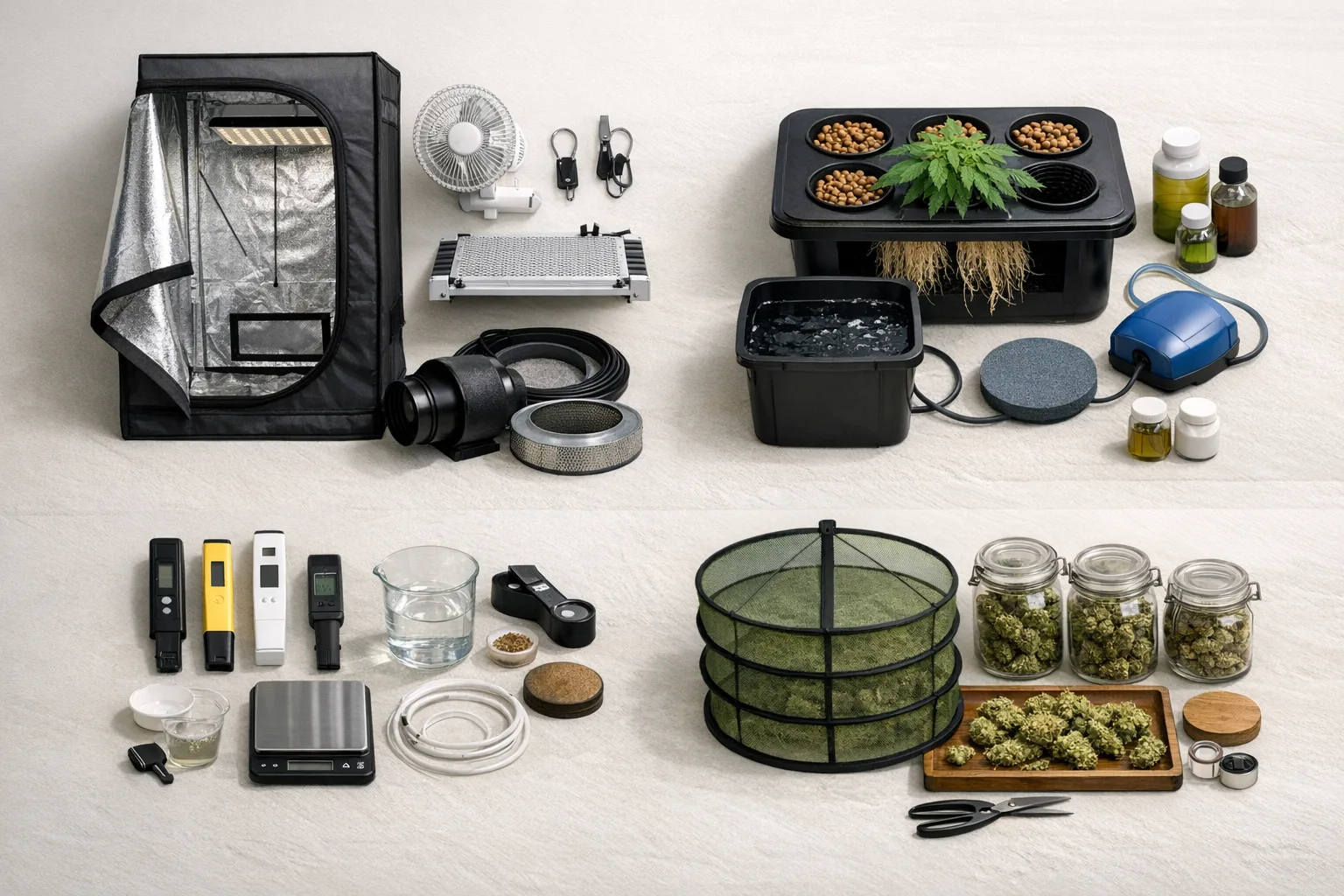
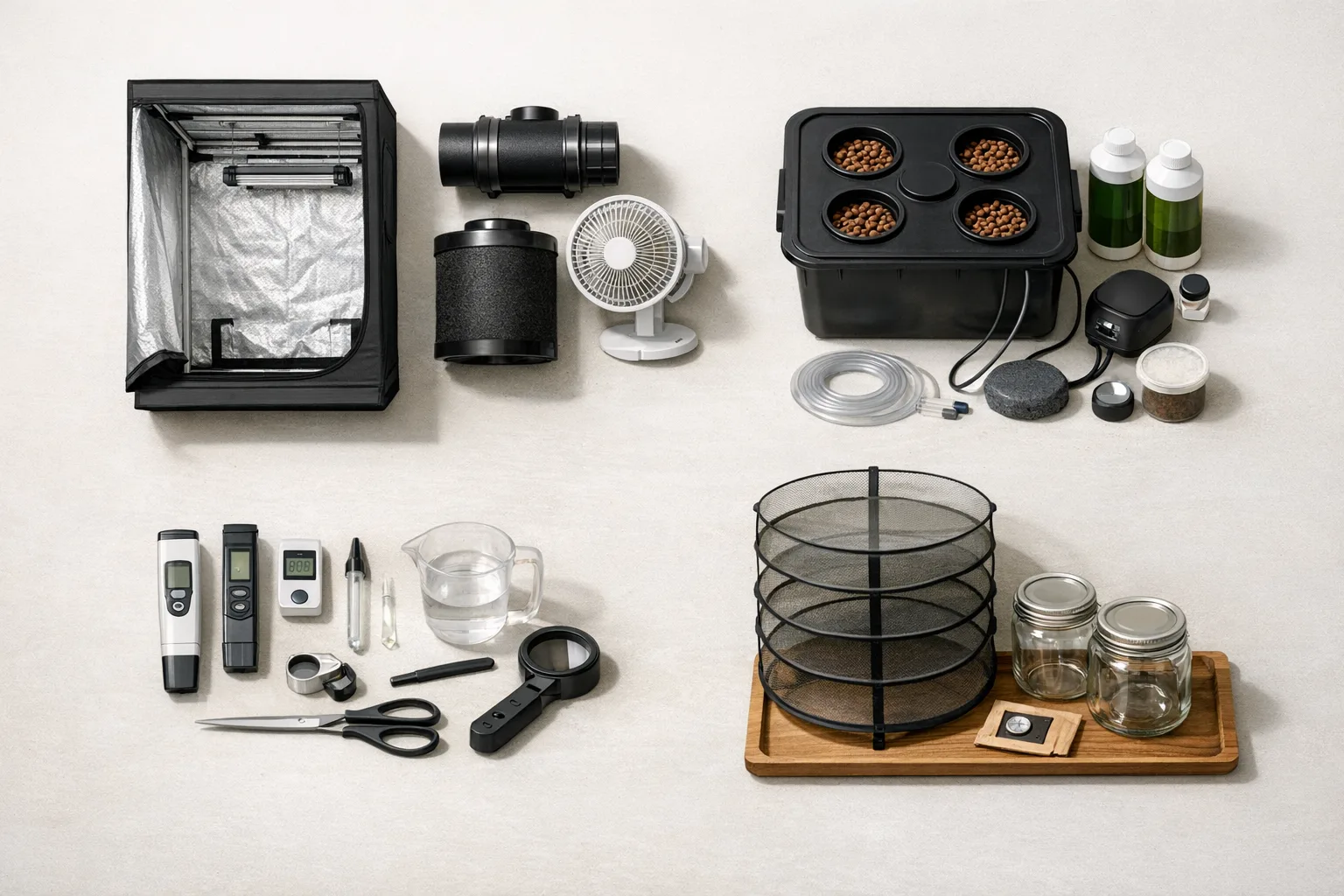
Compact cannabis growing is already about containment, restraint, and room readability. Renting makes those values less optional. The enclosure has to make sense in the room. Odor has to be managed like a real building issue, not a wish. Watering, cleanup, and the finish path all need to stay inside a footprint that does not create new housing problems every week. That is why renter pages belong next to compact cannabis grow setup for apartments and the compact grow setup checklist. The legal answer is only useful when it changes the technical plan early enough.

In practice, renter friction usually shows up through ordinary building issues: smoke-free rules, odor complaints, property damage concerns, noise, access, and whether the grow area can be secured. Even when the plant count is small and the cultivation is for personal use, those shared-property realities stay alive. That is why this page is not about squeezing the largest possible grow through the narrowest possible loophole. It is about understanding which room decisions still make sense once the lease and the building are part of the system.

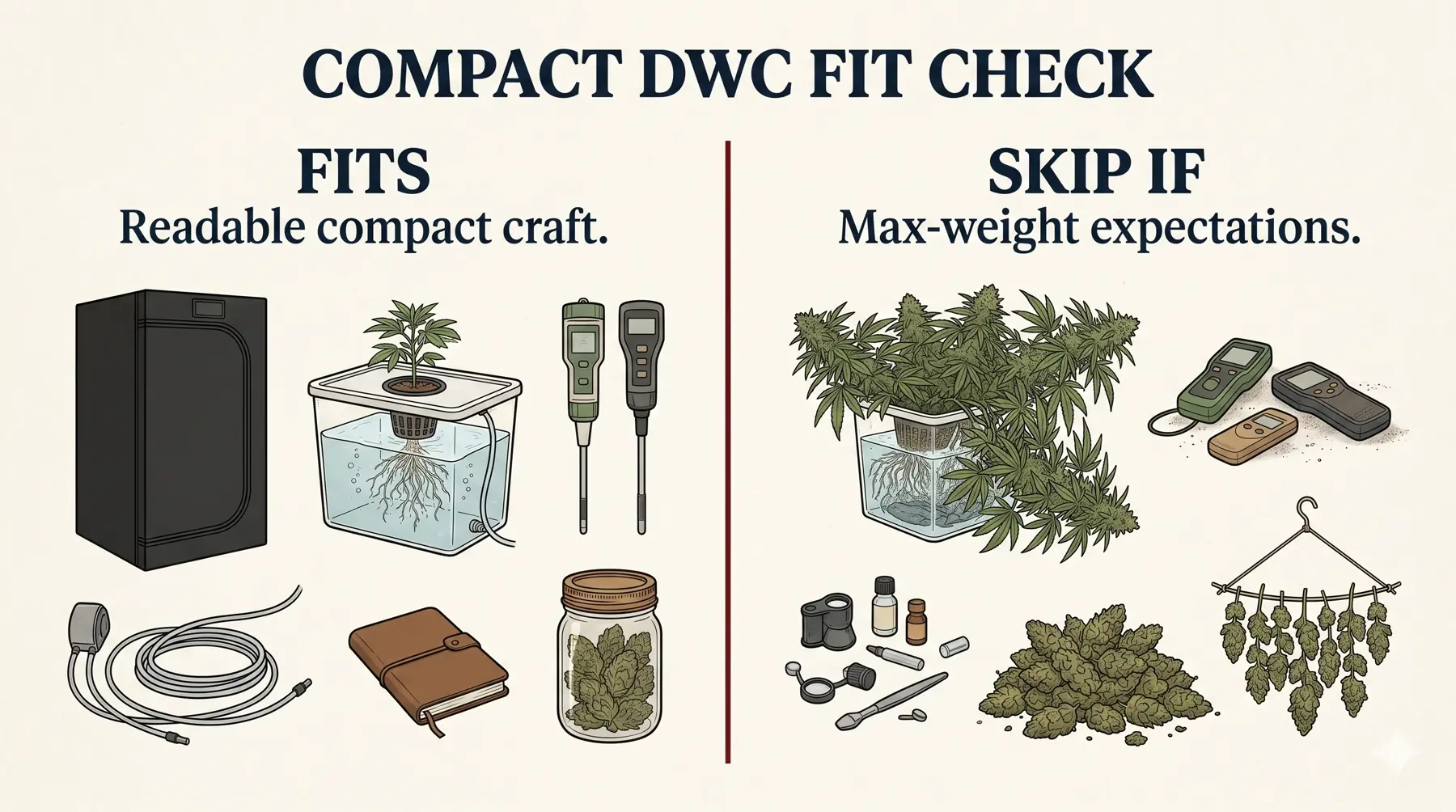
This is also why the word "compact" matters. A disciplined cabinet or small-tent workflow is easier to secure, inspect, dry down, and unwind than a room-wide plan that assumes private-home freedom. Renters usually do better when the grow stays modest enough that the room remains believable from seed through cure. If the setup cannot survive the lease, the landlord policy, the odor lane, and the finish path at the same time, it is not really a good compact setup.

Apartment housing fit board showing enclosure footprint, odor path, access lane, and building-rule checkpoints for a small indoor cannabis grow.
The room has to fit the lease as much as it fits the wall: access, odor path, and daily maintenance matter just as much as the enclosure size.
Decision layer

Use the rule stack before you decide what kind of grow can live in the apartment.

Rule layer What it can change What to verify before setup
State law Whether adult personal-use home cultivation exists at all, plus plant-count and security boundaries. Use the New York law page as the site baseline, then confirm the current official rule.
Lease and premises policy Whether the building claims a ban on growing, smoking, vaporizing, or certain use patterns on the property. Read the lease carefully and do not treat a vague housing posture as permission.
Federal-benefit exposure Whether the landlord says a federal benefit or subsidy would be at risk. If that exception is part of the building's explanation, get qualified legal clarification instead of guessing.
Odor and nuisance policy Whether shared-air, smoke-free, or nuisance rules change what the room can realistically carry. Plan odor and finish before you assume the enclosure solves everything.
Method fit Whether the chosen system is calm enough for the apartment once the rule stack is known. Only then compare cabinet vs tent, hydro vs soil, and strain size with the real room in mind.

This table is the reason ColaXpress keeps the renter lane narrow. A compact grow is not automatically a landlord-safe grow. A low-variance system only helps after the housing question is real enough to support it. If the rule stack is still murky, the next good decision is not hardware. It is clarity.

Where DWC or VGrow fits

Contained systems help renters only when containment is more than a marketing word.

DWC and cabinet-style systems can fit rental situations better than loose, improvised room setups because they keep the workflow smaller and more readable. That is the strongest educational case for the flagship VGrow + DWC reference path: it shows what a contained, compact, personal-use-sized grow can look like when the room, the air path, and the root zone are all easier to inspect. But that contained feel is not a housing exception. It does not erase a lease restriction, fix a nuisance issue, or make a landlord question disappear.

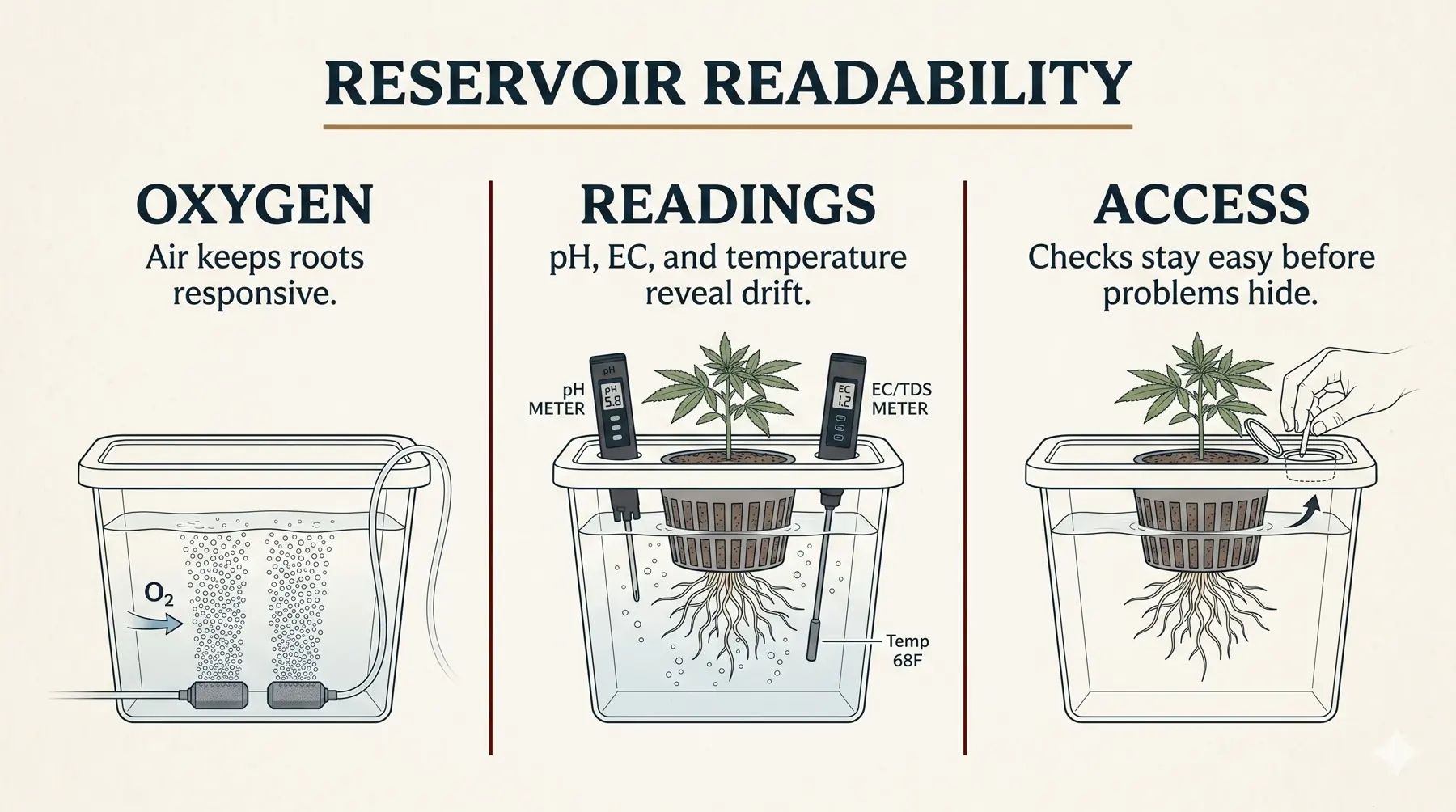
Hydro also adds renter-specific responsibilities. Water behavior, reservoir access, spill control, and maintenance routine matter more when the grow lives in a building you do not own. If the system is hard to service or likely to drift into leaks, it stops being a smart compact choice no matter how clean the cabinet looks in a photo. That is why renters should read DWC for beginners and the equipment guide with housing in mind, not just plant speed in mind.

The same caution applies to "low odor" thinking. A contained cabinet, carbon filtration, and a disciplined canopy can reduce odor problems, but they are not a permit slip for ignoring building policy. If the real goal is to keep the room stable and non-disruptive, compact systems can help. If the goal drifts toward concealment theater, the setup is already moving away from ColaXpress governance.

Compact grow room map showing enclosure, airflow, odor control, and nuisance-risk points inside a shared residential setting.
Containment only counts when the whole room stays readable: airflow, odor path, maintenance, and shared-space impact all need to behave together.
Common mistake

The classic renter mistake is reading the answer you want and ignoring the layer that can still stop the room.

Some readers lean on the part of the official guidance that sounds broadest and stop there. Others assume any landlord sentence automatically ends the question and never look at the tenant-protection side. Both habits are bad reading. A renter needs the full stack: state permission, housing control, federal-benefit exception, and the practical reality that smoke, odor, noise, and property damage still create building friction even when the plant count is small.

Another common mistake is treating odor-control language like a stealth tutorial. It is not. OCM's odor posture is about nuisance and shared-property impact, not about helping a grower disappear. That distinction matters for ColaXpress. A stable compact grow is a design problem. Concealment-first thinking usually produces the same failures renters fear most: oversizing, bad airflow, delayed maintenance, and a finish phase that spills into the rest of the apartment without a plan.

What to avoid
  • Assuming a state-law headline beats your lease automatically.
  • Confusing a smoke-free rule with every possible cultivation rule, or vice versa.
  • Ignoring federal-benefit language if the property relies on it.
  • Treating odor control like cover instead of nuisance management.
  • Building the room before you understand what the building will actually allow.
Source posture

What this page is based on

This page stays educational and renter-focused. It is not legal advice. Because landlord, lease, and building claims are Class A trust material in ColaXpress, the page is built on official New York OCM sources and keeps the wording deliberately narrow wherever housing rules can vary. The key point is that the OCM landlord page, home-cultivation FAQ, and adult-use baseline have to be read together instead of used as isolated headline answers.

Reviewed May 6, 2026. If your housing situation is unclear, get current jurisdiction-specific legal help before you build the room.

Contained DWC cabinet panel showing reservoir access, spill-control path, and maintenance checkpoints that matter when a compact grow lives in a rental.
A renter-safe compact system is still a maintenance system: access, spill control, and inspection routine matter as much as the cabinet shell.
Practical takeaway

The right renter question is not "Can I squeeze this in?" It is "Can this room carry the full legal and practical load?"

The most useful answer is usually conservative: clear the housing lane first, then choose the smallest honest system that still supports the whole seed-to-cure path. If the room, lease, or building policy stays unclear, do not let gear shopping answer a legal question it cannot solve.

01 Read the state baseline

Start with the New York law guide so you know the statewide adult-use framework before the housing layer enters.

02 Read the lease and building policy

Separate cultivation, smoking, odor, and nuisance rules instead of pretending one line answers every housing question.

04 Build for stability, not theater

Choose a compact workflow that can be secured, maintained, dried down, and corrected calmly inside the same apartment.

If the shortest next path helps, move from the apartment setup guide into low odor cannabis grow setup and the setup checklist, then use FAQ and search to close the remaining gaps. If the question keeps turning back into leases, premises rules, or federal-benefit exceptions, stop treating it like a gear problem and verify the housing answer directly.

FAQ

Questions people usually mean when they search this phrase.

Can a New York landlord ban cannabis growing in a rental unit?

Sometimes. Current OCM guidance says landlords and property owners can ban growing on their premises, but other OCM guidance also says renters generally should not be denied a lease or penalized solely for lawful cannabis conduct unless a federal-benefit exception applies. Read both the official guidance and your housing documents together before assuming the answer is settled.

Can a landlord ban smoking or vaping even if home grow is otherwise allowed?

Yes, smoke-free and vapor-free premises rules are a separate housing issue and can still matter even when adult home cultivation exists at the state level. Do not confuse a smoking rule with the full cultivation answer.

What if I live in a co-op or condo?

OCM says cooperative and condominium associations can implement odor-mitigation policies that are reasonable and do not impose an undue burden. That means the shared-building layer is still part of the answer even when the plant count is small.

Does a compact cabinet solve the landlord problem by itself?

No. A contained cabinet can make the room easier to manage, but it does not erase lease language, premises rules, nuisance standards, or the need to keep the workflow stable and non-disruptive.

What should a renter check before setting up a compact grow?

Check the current state rule, the lease, any building or HOA policy, smoke-free rules, odor expectations, and whether the enclosure still makes sense for the apartment once drying, jars, and cleanup are part of the plan.