DWC guide

DWC for beginners starts with roots, oxygen, nutrient solution, and steady checks.

DWC, or deep water culture, is a hydroponic method where plant roots sit in oxygenated nutrient solution instead of soil. When it is clean and monitored well, it can support fast, readable growth in compact cannabis setups. If you want the shortest definition first, start with what is DWC and then come back here for the full beginner walkthrough.

The reason beginners find it intimidating is also the reason it can be great: the root zone tells the truth quickly. DWC is not vague. It will let you know how disciplined the setup really is.

What it is Roots suspended in nutrient-rich, oxygenated water.
What matters most Oxygen, clean water, stable pH, and sane feeding.
Main beginner mistake Reacting too fast to every reading instead of looking for patterns.
Visual reference

DWC gets much less intimidating once the reservoir stops feeling invisible.

The point of these visuals is not to turn the page into a science poster. It is to make the root zone easier to picture, easier to read, and easier to judge without inventing drama every time the plant answers back.

  • Use the hero image to anchor the method in a clean, compact setup.
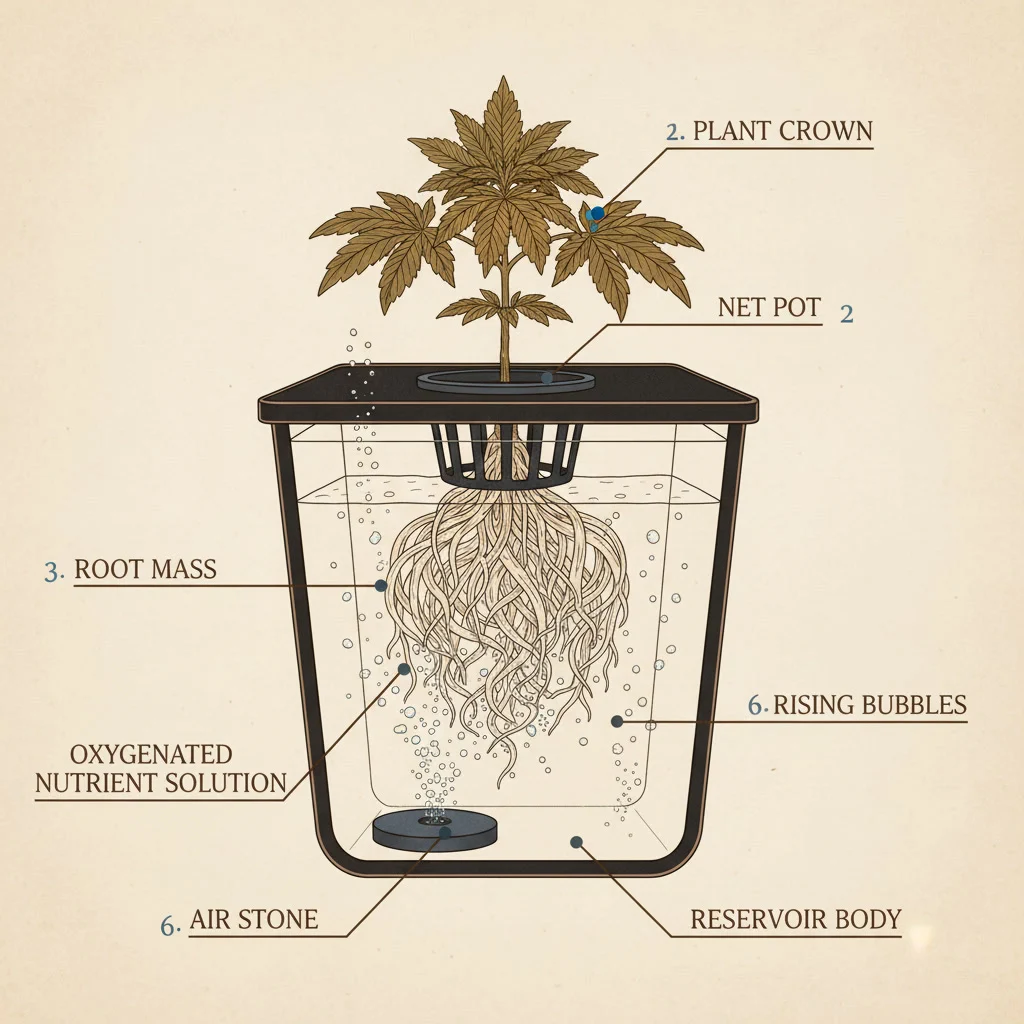
  • Use the cutaway to understand what the roots, solution, and air stone are each doing.
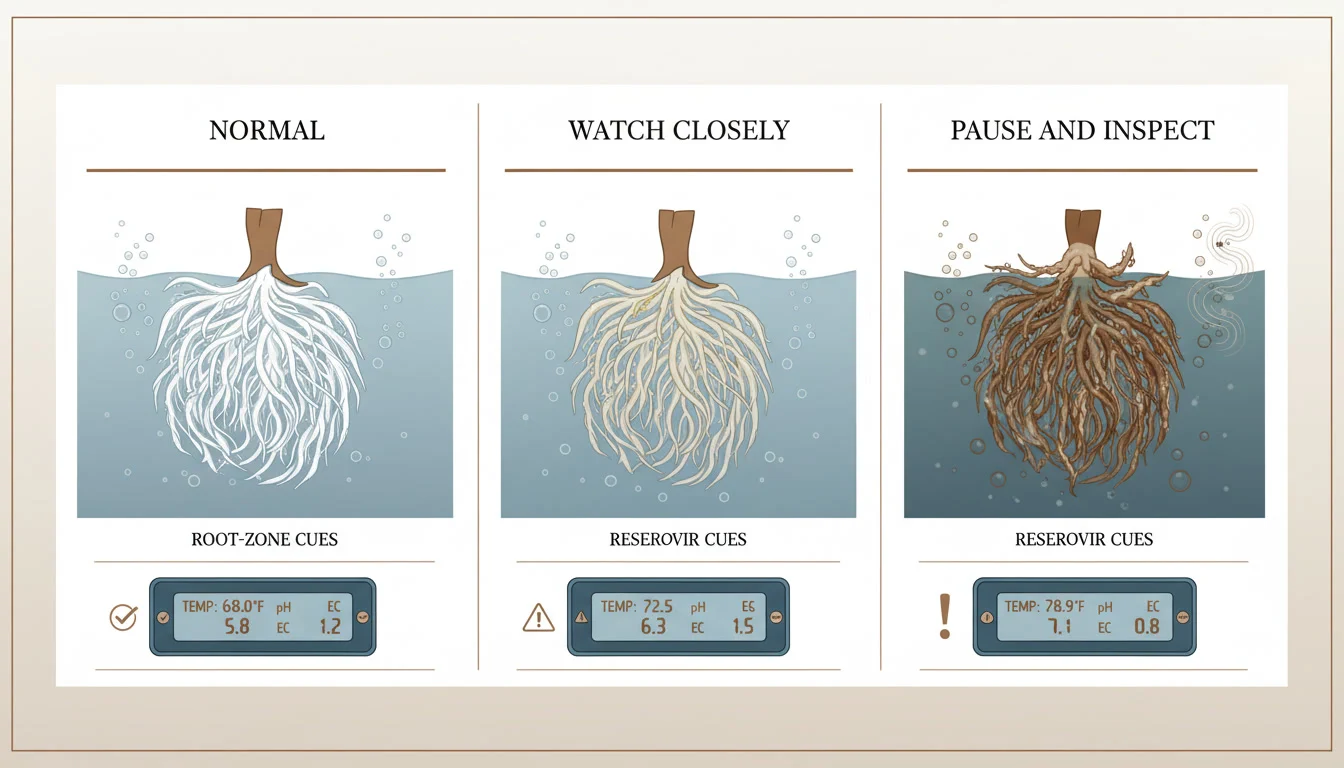
  • Use the comparison board to separate normal activity from real warning signs.

Compact deep water culture setup shown beside a tall grow cabinet on a warm studio surface.
A compact DWC path works best when the reservoir stays clean, measurable, and easy to read from day one.
How it works

The plant eats from the water, so the water has to stay trustworthy.

In DWC, the reservoir becomes the root environment. That means water quality, nutrient strength, oxygenation, and pH are not background details. They are the room the roots live in.

Why it fits compact grows

A contained setup pairs well with a method that rewards direct feedback.

The flagship ColaXpress path pairs DWC with the VGrow cabinet because both favor control. The space stays contained, the root zone stays accessible, and the signals stay easier to read than in a messier setup.

System map

DWC gets simpler once you can see what each part is responsible for.

Cutaway diagram of a DWC reservoir showing the plant crown, net pot, root mass, oxygenated nutrient solution, air stone, and rising bubbles.
At its core, DWC is suspended roots, oxygenated nutrient solution, and a reservoir that stays readable enough for the plant to tell the truth.
What normal looks like

Good DWC is active, not dramatic.

  • Some pH movement is normal. The problem is wild drift, not every tiny shift.
  • Water level changes mean the plant is using the system, not that the reservoir is suddenly cursed.
  • Healthy roots should look clean, alive, and free of that sickly something-is-cooking vibe.
  • The reservoir should smell clean or neutral. It should never smell like a warning label.
What should make you pause

DWC is not mysterious, but it does expect you to notice when the pattern changes.

Sharp smell, ugly roots, pH movement that suddenly becomes chaotic, or feed behavior that stops making sense are all reasons to slow down and actually inspect the system. DWC problems usually announce themselves through patterns before they turn theatrical.

The mistake is not spotting something strange. The mistake is deciding the fix before you have even confirmed what changed.

Root-zone cues

Most beginner confidence comes from learning the difference between active, drifting, and truly concerning.

Three-state comparison board for DWC root zones showing normal, watch closely, and pause and inspect conditions.
Use the board as a rough read, not a panic button. Mild drift usually means watch closely. True warning signs ask for inspection, not improvisation.
Core parts

The DWC basics are straightforward once you know what each part is doing.

Water

Reservoir

This holds the nutrient solution and becomes the plant's immediate feeding environment.

Air

Oxygenation

Roots need oxygen as much as they need water. Stale water is where root confidence goes to die.

Reading

Monitoring

pH and EC tell you whether the reservoir is staying in a range the plant can actually use.

What to watch

If you only track a few things at first, make them the right few.

Daily Water level

Rapid drops or odd behavior can tell you a lot before the leaves start sending complaints.

Daily pH

Drift is normal. Wild swings are not. Watch the pattern, not just one number in isolation.

Regularly EC

This helps you see whether the feed strength is steady, too hot, or not keeping up with the plant.

Always Root health

Healthy roots look clean and vigorous. A reservoir should not smell like a warning.

Reality check

When the reservoir feels off, use the first clean explanation before inventing a dramatic one.

Signal What it may mean Best first response
pH drifting a bit Often normal system movement Log it, watch the pattern, and avoid correcting every small wobble.
pH swinging hard Something in the reservoir is unstable Recheck the reading, inspect the water and roots, and look for the simplest cause first.
Odd smell Reservoir cleanliness or oxygenation issue Inspect immediately. DWC should not smell like an argument.
Roots looking rough Stress, poor oxygenation, or early root trouble Slow down, inspect the basics, and resist the urge to solve everything by dumping in more nutrients.
Beginner approach

Restraint is a better DWC skill than constant adjustment.

The most useful early habit is consistent observation. Check the reservoir, take the readings, and let patterns develop before you decide the whole system is in crisis. DWC moves quickly, but that does not mean every number needs a dramatic response.

Good beginners stay calm, keep records, and avoid turning one odd reading into a chemistry performance.

First response

When something feels wrong, do the obvious checks before you start improvising chemistry.

  • Confirm the reading before building a whole theory around it.
  • Check the obvious: water level, smell, root appearance, and whether anything changed recently.
  • Look for a pattern instead of letting one bad number write the whole story.
  • Change one thing at a time so the next reading actually means something.
Before adding more nutrients

The reservoir does not need a dramatic speech every time the plant looks hungry.

One of the fastest ways to turn a manageable DWC setup into a mess is to answer uncertainty with more feed. Beginners often assume that faster-growing hydro automatically wants harder feeding. Sometimes it does not. Sometimes the reservoir is asking for cleaner observation, not a stronger mix.

DWC is not hard because it is complicated. It is hard because it answers quickly and beginners often answer back too fast.

What beginners get wrong

DWC usually goes sideways for simple reasons, not mysterious ones.

  • Adding nutrients aggressively because fast growth sounds more exciting than stable growth.
  • Ignoring oxygenation and focusing only on feed strength.
  • Chasing every pH shift instantly instead of watching for a broader pattern.
  • Treating reservoir cleanliness like optional housekeeping instead of core system maintenance.