Troubleshooting guide

Humidity Problems in a Grow Cabinet

Humidity problems in a grow cabinet usually mean the enclosure is holding more moisture than the air path, plant structure, and surrounding room can clear. The most common causes are stalled exhaust, too much canopy for the footprint, wet heavy air coming from the room outside the cabinet, or a maintenance pattern that kept adding moisture without restoring readability. In a compact grow, high humidity is rarely random. It is usually the room telling you the cabinet stopped matching the load you asked it to carry.

That is why panic fixes often backfire. If you change pruning, feeding, fan settings, and watering at the same time, you do not solve the pattern. You make the next read worse.

Most common cause Too much moisture load inside a cabinet that no longer clears air cleanly enough to stay believable.
Best first move Read the room, the air path, and the canopy before you touch nutrients or buy more hardware.
Main warning Humidity usually becomes a structure problem before it becomes a product problem.
What it means

Humidity trouble is usually a room-logic problem wearing a climate label.

Searchers often mean one of three things when they type this phrase: the cabinet feels wet and heavy, the hygrometer keeps climbing in a way that does not settle, or the grower senses the room is getting harder to trust even before the plant looks obviously stressed. The direct answer is that a cabinet only has so much margin. Once airflow slows, the plant mass expands past what the footprint can ventilate, or the surrounding room starts feeding the enclosure damp air, moisture stacks up fast.

That is why this page is not just about a number on a display. Humidity in a compact cabinet changes how leaves transpire, how air moves through the canopy, how comfortable the surrounding room feels, and how believable late-flower conditions remain. If the cabinet is wet enough that every opening releases a wave of heavy air, the issue is no longer minor. The room is telling you the enclosure and the load are out of proportion.

ColaXpress keeps treating humidity as a systems question for that reason. This page belongs with the compact grow setup checklist, the daily rhythm in daily cannabis grow checks, and the broader small-space logic in common mistakes growing cannabis. A lot of fake plant mysteries begin in the air before they ever reach the bottle or the leaf.
Short version

The cabinet is rarely too humid for no reason. It is usually too busy, too warm, or too poorly cleared.

  • Read the surrounding room before blaming the cabinet alone
  • Check whether the canopy outgrew the air path
  • Assume structure and airflow before assuming a dramatic plant problem
  • Fix the read first, then make the correction
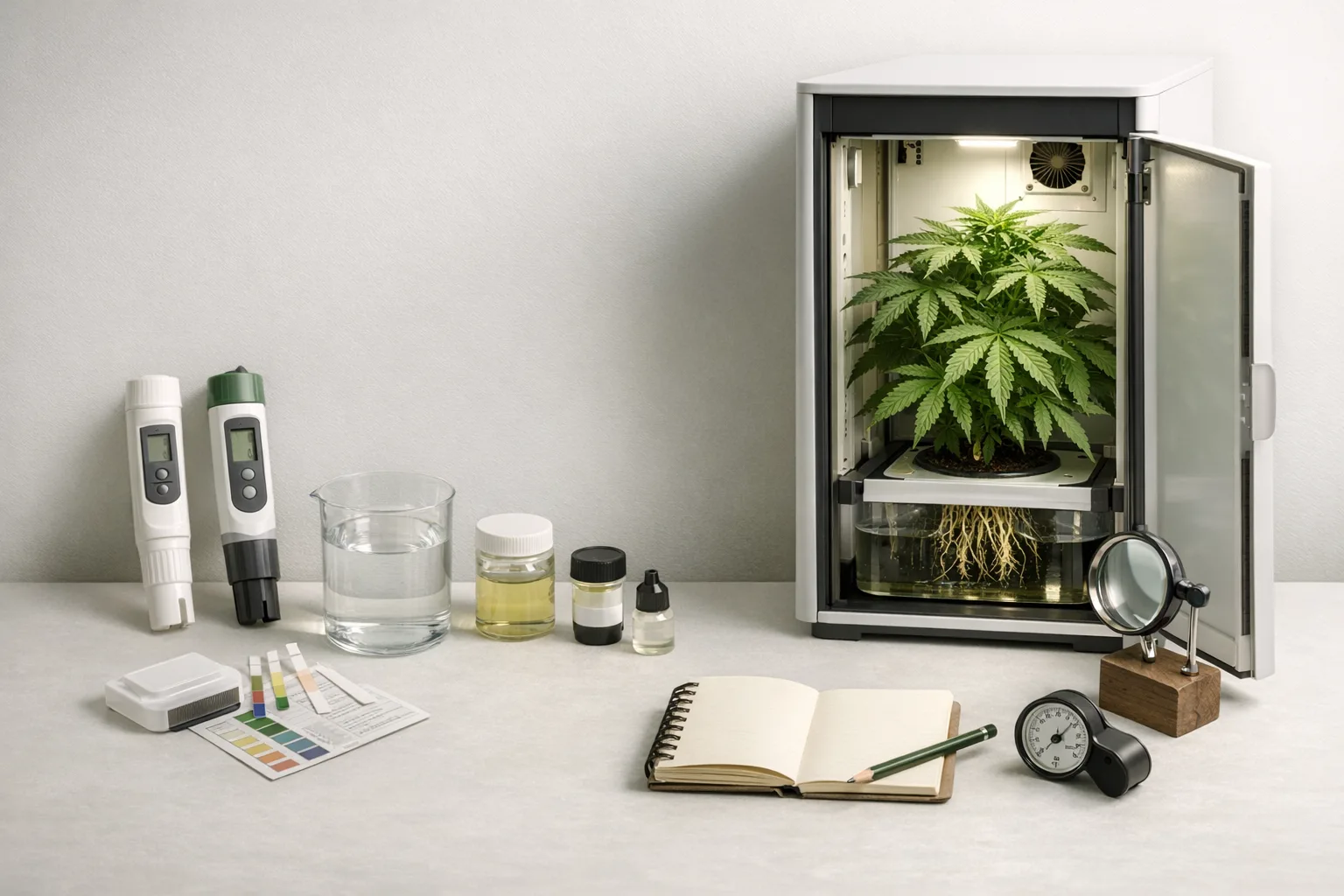
Compact grow dashboard showing humidity, temperature, canopy notes, and room checks used to diagnose a cabinet that keeps feeling heavy.
Humidity problems usually get easier once the room is read in order instead of treated like a random spike.
Why it matters in a compact grow

Small cabinets have less slack, so moisture drift gets louder faster.

Compact rooms tell the truth quickly. A larger room can sometimes blur weak planning for a little longer because there is extra volume, longer air travel, and more physical separation between surfaces. A cabinet does not have that luxury. If the leaf mass gets dense, if exhaust is weak, or if the room feeding the cabinet is already warm and damp, the enclosure starts carrying that contradiction almost immediately.

That is why high humidity inside a cabinet often feels more dramatic than it is. The root cause may be ordinary: crowded structure, poor service access, a stale lung room, or a wet finish-stage handoff that was never planned. But compact spaces amplify the pattern. That is also why readers who frame the same issue more generally should keep this page paired with how to lower humidity in a small grow tent. The tent page is the quick-answer version. This page is the cabinet-specific version where containment, access, and room fit matter more.

Humidity also matters in a compact grow because it compounds other weak decisions. A heavy wet cabinet is often the same cabinet that is harder to inspect, slower to clear after opening, more vulnerable to odor drift, and more likely to make the grower overcorrect. That is why cabinet humidity usually belongs in the same conversation as low odor cannabis grow setup, cabinet grow vs grow tent, and why growth is slow in a compact setup. The room does not split those consequences apart just because the grower wants to.

Airflow board for a compact enclosure showing intake, exhaust, circulation, canopy blockage, and where heavy wet air gets trapped.
In a compact enclosure, humidity usually follows the same map as weak airflow and excess canopy density.
Pattern table

The cabinet usually gives the same warning signs before the problem becomes expensive.

What you notice What it usually points to What to check first
The cabinet feels heavy after lights-out The enclosure is holding more moisture than the night air path can clear. Check exhaust behavior, room conditions outside the cabinet, and whether the canopy got too dense.
Leaf mass looks thick and trapped The structure is carrying too much foliage for the footprint and circulation path. Read canopy density before assuming the fix is a stronger fan.
The cabinet recovers slowly after opening Air is moving, but not cleanly enough to reset the space. Trace intake, exhaust, and any blockages between the plant and the air path.
The room outside already feels damp The cabinet is inheriting a weak lung room and amplifying it. Improve the room feeding the cabinet before assuming the enclosure itself is broken.

This is where many growers lose the plot. They treat the hygrometer like the whole problem instead of a signal about the system. A cabinet that keeps returning to heavy air is usually telling you the enclosure and the moisture load no longer agree.

Where DWC or VGrow fits

DWC does not create every humidity problem, but it can make room problems easier to notice.

Deep water culture sharpens feedback. That is a strength, not a flaw. When the room gets wet and the air path slows down, a contained DWC workflow often makes the mismatch feel more obvious because the rest of the system is already direct. This is one reason a VGrow-style cabinet can feel brutally honest: the enclosure is small, the service path is close, and the root zone is readable enough that weak room behavior stands out faster.

That does not mean DWC is the culprit whenever humidity climbs. It means the system gives you fewer places to hide from the truth. If the cabinet is warm, crowded, and slow to clear, the hydro path will not politely disguise it. Readers running hydro should keep this page connected to DWC basics for beginners and root problems in DWC so room drift and root-zone drift do not get confused with each other.

The VGrow angle matters because its appeal is containment. A contained cabinet is helpful only when the surrounding routine matches that containment. If the cabinet is opened constantly, the plant has outgrown the airflow lane, or the maintenance pattern keeps adding moisture without clearing it, the same containment that normally helps you can start amplifying the problem. That is why the equipment side of the decision still matters, and why this page should stay linked to the VGrow DWC guide and the wider cannabis growing equipment cluster.

Compact DWC cabinet panel showing reservoir readability, service access, and moisture checkpoints used when cabinet air feels wet or slow.
A readable DWC cabinet helps separate room-level moisture drift from root-zone issues that only look similar at first.
Common mistake

The usual error is solving the symptom before the room has been read.

The most common mistake is reacting to humidity like it is a pure gear problem. Growers add new hardware, change multiple settings, or blame nutrients before they ever ask whether the cabinet is simply overfilled, under-cleared, or being fed bad air from the room outside it. That is how a simple moisture pattern becomes a stack of noisy corrections.

The second mistake is ignoring proportion. A cabinet can only carry so much leaf mass, moisture release, and late-flower density before the air path begins to lose the argument. If the structure no longer fits the footprint, more fan noise does not restore honesty. It only makes the room louder.

The third mistake is diagnosing humidity in isolation. In compact grows, moisture drift often travels with odor pressure, slow recovery after opening, and a general loss of readability. That is why broader guides like craft cannabis cultivation matter here. The finish-first mindset is really a room-discipline mindset. If the room cannot stay believable through flowering, it will rarely become easier during harvest and cure.

Field note

A wet cabinet usually needs a cleaner story before it needs a bigger rescue.

  • Read the room before changing multiple variables
  • Do not let canopy ambition outrun the air path
  • Do not confuse fan noise with airflow quality
  • Do not isolate humidity from the rest of the compact workflow
Practical takeaway

Fix the cabinet by restoring readability, not by stacking panic moves.

Start with the surrounding room. Then read the air path. Then check whether the plant still fits the enclosure. Then decide whether the correction belongs to structure, airflow, or routine. The point is not to make the hygrometer look better for one hour. The point is to make the cabinet believable again.

If you want a practical order, use this sequence. First, ask whether the lung room outside the cabinet is already too warm or wet. Second, confirm exhaust and circulation are acting like a route rather than a guess. Third, check whether the canopy is simply holding too much moisture for the footprint. Fourth, only then decide whether you need a hardware adjustment, a structural correction, or a calmer maintenance routine. If the pattern still feels muddy after that, use the broader questions in the ColaXpress FAQ to make sure you are not trying to solve a planning problem with a plant-level correction.

01 Read the room

Do not ask the cabinet to breathe better than the room that feeds it.

02 Read the route

Make sure intake, exhaust, and circulation still move moisture out instead of just around.

03 Read the load

Check whether the canopy, watering pattern, and late-flower density now exceed what the footprint can clear.

04 Make one honest correction

One cleaner change teaches more than five panicked changes made on the same afternoon.

Compact moisture pressure map showing canopy density, room air, drying pressure, and routine drift as the main reasons a cabinet stays humid.
Humidity usually stays high for the same few reasons: the room is wet, the canopy is too dense, or the routine keeps adding load without clearing it.
FAQ

Questions people usually mean when they search this phrase.

Why is my grow cabinet humidity high even when the plant looks fine?

Because humidity often drifts before the plant shows dramatic stress. Heavy air, a crowded canopy, or a weak room outside the cabinet can raise the moisture load without creating immediate leaf damage.

Can too much plant mass raise humidity in a small cabinet?

Yes. Dense foliage holds and releases moisture inside a very small footprint. In compact grows, too much canopy often becomes an airflow and humidity issue before it becomes an obvious size issue.

Does DWC make cabinet humidity worse?

Not automatically. DWC does not create every humidity problem, but a contained hydro workflow often makes room drift easier to notice because the system is already direct and the enclosure has less slack.

Should I buy more hardware first if cabinet humidity keeps climbing?

Not first. Read the room, the air path, and the canopy before adding gear. Many humidity problems come from proportion and airflow rather than a missing purchase.