Method counterweight

When 12/12 From Seed Is a Bad Idea

12/12 from seed is a bad idea when the grow needs more vegetative recovery, more plant size, more training room, or more margin for a cultivar that does not stay polite in a compact space. In practical terms, it is usually the wrong move when you are trying to fill a broader canopy, rescue a weak early run by rushing it forward, or force a stretchy plant into a method that was designed to keep the room smaller and cleaner.

ColaXpress still favors 12/12 from seed for compact craft grows because it removes fake decisions from small rooms. That only stays true when the method matches the room. This page shows where that match breaks so the flagship method stays credible.

Bad fit when You need more veg time, more recovery, or a wider plant than the compact 12/12 path is built to support.
Most common misuse Using 12/12 as a speed trick when the real issue is a room, cultivar, or goal mismatch.
Better question Does this method fit the footprint and the outcome, or am I asking it to solve a different problem?
What it means

The method becomes a bad idea when the grow needs more room than the schedule is willing to give it.

Searchers asking when 12/12 from seed is a bad idea are usually not looking for theory. They are trying to avoid a run that feels undersized, rushed, badly matched to the cultivar, or too limited for the structure they actually wanted. The short answer is simple: 12/12 from seed is a weak fit when you need the plant to build more body before flower, when the room can honestly support that extra body, or when the cultivar already tends to stretch enough that an early flower schedule will not really simplify the run.

That is why this page is not a contradiction of the main 12/12 guide. It is the counterweight that makes that guide more trustworthy. If the plant needs more time to establish, if you want heavier training, or if the cabinet is not actually the limiting factor, then a longer path may serve the grow better than forcing an edited one. Use how long a compact grow actually takes if the timing pressure is making the decision feel more urgent than it really is.

Cultivar fit matters here more than a lot of growers want to admit. Some plants stay compact, branch in a way that still feels readable, and reward the smaller, more disciplined timeline. Others ask for more runway, more body, or more forgiveness before flower pressure becomes the dominant story. If the plant choice itself is uncertain, compare this page with best cannabis strains for small spaces before treating 12/12 like a universal answer.
Memorable line

A compact method stops being disciplined the moment it starts solving the wrong problem.

  • Wrong goal, wrong method
  • Wrong cultivar, wrong rhythm
  • Wrong room story, wrong expectation
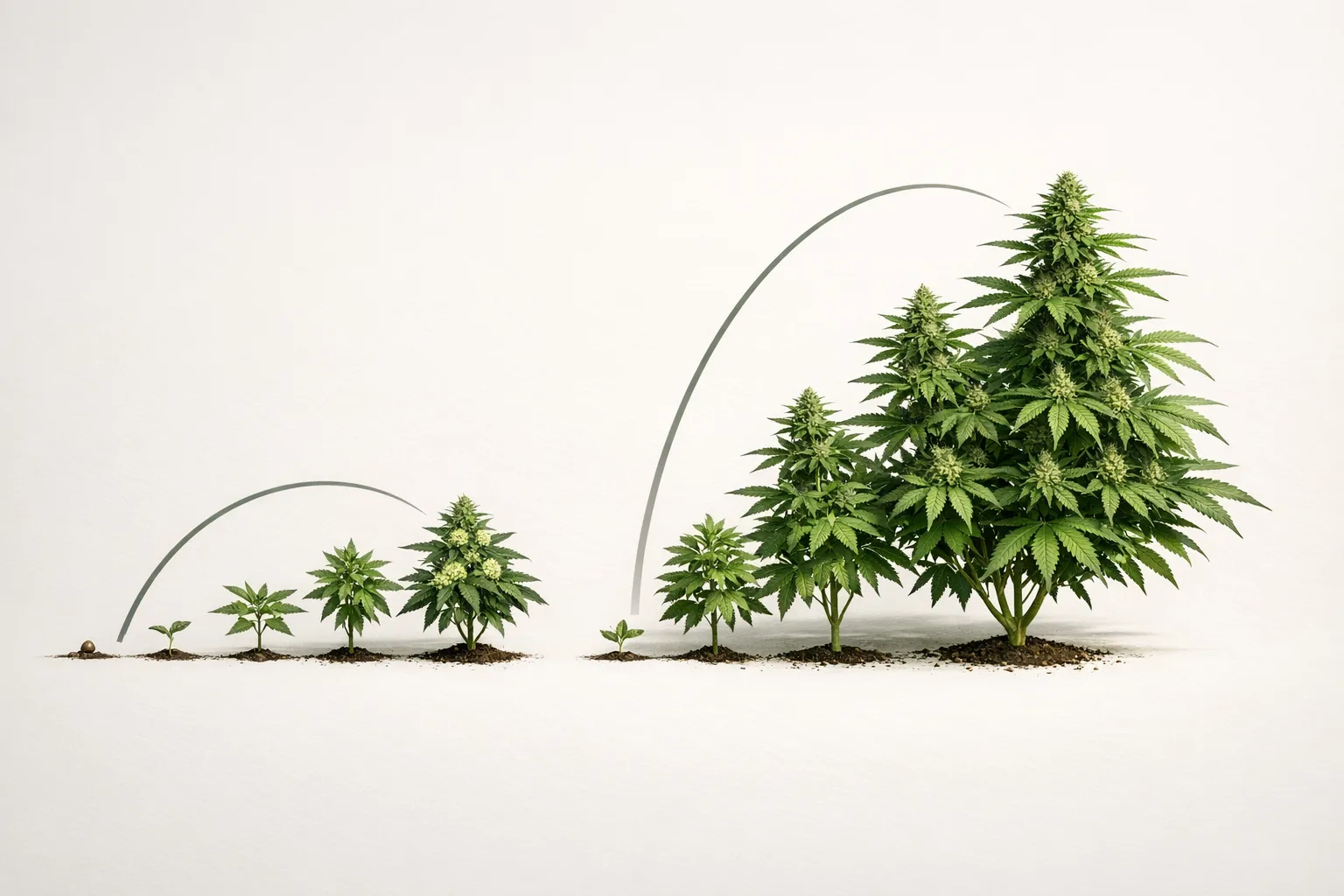
Timeline comparison showing 12/12 from seed against a longer vegetative path, highlighting where extra veg time can better support plant structure and recovery.
The question is not whether 12/12 is faster. The question is whether the shorter structure path is actually what the room and the goal need.
Why it matters in a compact grow

Small rooms reward edited methods, but they still punish false shortcuts.

Compact grows are exactly where 12/12 from seed can shine, which is also why using it badly becomes so visible. In a smaller cabinet or tight tent, the method often helps keep the plant proportional and reduces training noise. But a compact room does not automatically mean 12/12 is right. If the cultivar stretches hard, if the canopy still gets unruly, or if the grow needs more recovery from a rough start, the smaller room will expose that mismatch quickly.

This matters because compact setups have less slack. A larger room can sometimes absorb a method mismatch longer before the consequences get loud. A cabinet usually cannot. If you start a run under 12/12 hoping it will make a bad fit disappear, the room tends to answer back fast through structure, yield ceiling, or a finish path that feels thinner than it should.

That is also why this page belongs next to the compact grow setup checklist. A smaller room does not just ask whether the light schedule is clever. It asks whether the footprint, cultivar, root-zone method, and finish expectations all agree. If those parts are fighting each other, 12/12 stops looking elegant and starts looking like a shortcut that got assigned a job it never wanted.

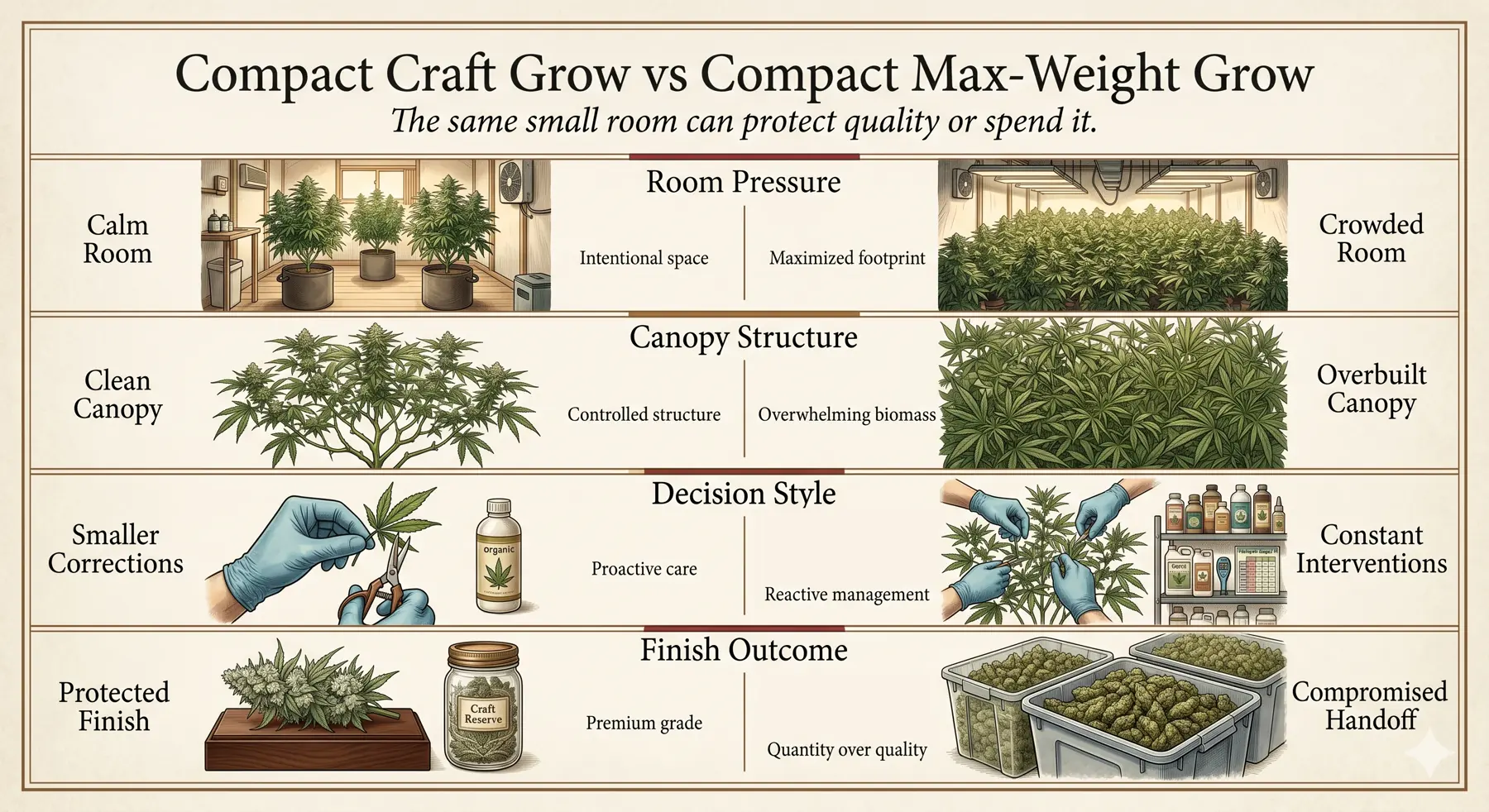
Comparison board contrasting a compact craft cannabis grow with an oversized canopy plan that overwhelms the small-space workflow.
A compact room gets stronger when the plant fits the footprint. It gets louder when the method is being asked to hide a canopy ambition it cannot really carry.
Decision layer

12/12 from seed is usually a bad idea in four recognizable situations.

If the situation is Why 12/12 becomes weaker What that usually points to instead
You want a broader, more trained canopy The schedule limits how much body the plant gets to build before flower pressure becomes the main story. A longer vegetative path, or at least a method that admits the goal is structure first, not just containment.
The cultivar already stretches hard Early flower does not always neutralize stretch the way people hope, so the plant can still outgrow the clean compact logic. A more cautious fit choice, a different cultivar, or a method that gives you more control over size before flower.
The run had a rough start If the seedling or early structure lost momentum, pushing straight through can lock in a weak foundation instead of correcting it. Stabilize the room and let the plant recover before pretending a tighter schedule is discipline.
You are using the method to rush the calendar The method gets treated like speed insurance instead of a room-fit decision, and the finish usually ends up paying for that. A timeline decision grounded in the real workflow, not in impatience or comparison culture.
Where DWC or VGrow fits

The VGrow plus DWC path is where 12/12 usually makes the most sense, which also makes the bad-fit cases easier to spot.

A compact cabinet plus a readable root zone is exactly where 12/12 from seed tends to make the cleanest argument. The room is contained. The plant stays smaller. The root zone tells the truth quickly. The grow can move toward one compact, finishable workflow instead of growing into a larger-room fantasy. That is why ColaXpress keeps using the VGrow DWC guide as a reference model rather than treating 12/12 like a floating internet trick.

But that same honesty is why the method becomes a bad idea sooner when it stops fitting the room. DWC speeds feedback. A cabinet leaves less room. If the plant still needs more structure, recovery, or width than the method is allowing, the mismatch is harder to hide. If the root-zone side still feels unclear, compare this with root problems in DWC and DWC vs soil for small cannabis grows. Often the real question is not "12/12 or not?" It is "does this whole stack still agree with the room?"

The same thing is true at the definition level. If the grower is still unclear on what the hydro side is actually doing, step back to what is DWC before blaming the light cycle for every mismatch. Sometimes the method conflict is real. Sometimes the room simply has too many unanswered questions stacked on top of each other.

Compact VGrow-style cabinet with DWC setup and fit-check notes showing when a small contained flowering workflow still matches the plant and when it starts to mismatch.
The cabinet and the root zone can make 12/12 feel cleaner, but they also make a method mismatch easier to catch before it hides in wishful thinking.
Common mistake

The biggest mistake is using 12/12 to skip judgment instead of using it to sharpen judgment.

  • Choosing 12/12 because it sounds simpler, even though the actual goal is a bigger, broader plant.
  • Assuming early flower will fix a cultivar that already stretches too aggressively for the cabinet.
  • Keeping the method after a rough seedling start because the schedule feels committed now.
  • Blaming the method for weak results when the real mismatch was canopy ambition, room instability, or impatience.
  • Confusing a lower-maintenance structure with a lower-standards finish.
Risk filter

If the room already feels contradictory, 12/12 usually makes the contradiction louder, not quieter.

This is where the method gets misunderstood. People sometimes treat it like a cleanup tool for loose planning: too much stretch risk, too much timeline pressure, too little room control, too much plant ambition. But 12/12 works best when the room was already edited.

That is why a bad-fit 12/12 run can feel disappointing. The schedule feels intentional, but the result still feels thinner or noisier than it should. The match failed.

Another version of the same mistake is moralizing the method. Some growers start talking like 12/12 is either the disciplined way to grow or the lazy way to grow. Neither is useful. The method is only disciplined when it fits the room honestly. When it does not, staying loyal to it is not discipline. It is stubbornness with cleaner branding.

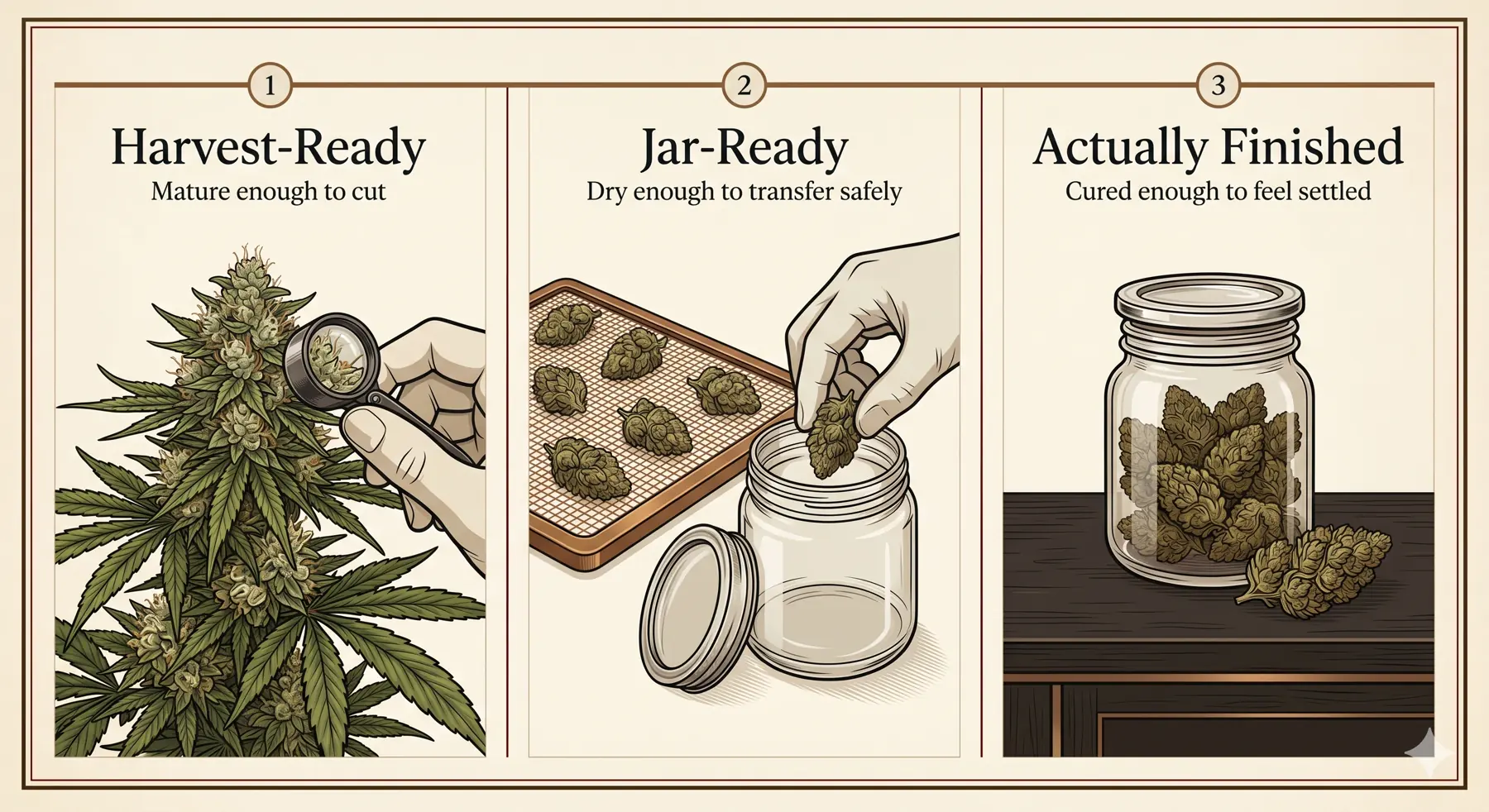
Educational finishing timeline showing how method choice affects the path from compact flower structure through harvest timing, drying, and cure.
Method choice is not only about the shape of the plant. It also changes how much pressure lands on harvest timing, dry discipline, and the jar.
Practical takeaway

Use a four-question filter before you commit the run to 12/12.

The practical goal is not to defend or reject 12/12 in the abstract. It is to decide whether a shorter structural path helps this exact cabinet, this exact plant, and this exact finish plan stay coherent from seed to jar.

01 What is the real goal?

If the goal is a broad trained canopy or more plant mass, admit that early. A method built for compact proportion should not be forced to impersonate a bigger-room plan.

02 Does the cultivar cooperate?

If the plant tends to stretch hard or needs more early stability, do not pretend the schedule alone will civilize it. Use best cannabis strains for small spaces if the plant-choice side still feels fuzzy.

03 Is the room already clean?

If the environment, root zone, and daily routine are still noisy, do not turn 12/12 into a speed patch for problems it cannot actually solve.

04 Can you still finish well?

If the tighter structure makes the whole seed-to-jar path more readable, great. If it only helps the calendar while making the finish feel thinner, the method is probably the wrong fit. Use guide search if you need to trace the next decision through the rest of the system.

The clean rule is this: choose 12/12 from seed when it improves proportion, clarity, and finish discipline. Avoid it when it only improves the feeling of moving faster.

FAQ

Questions growers ask when they are unsure about 12/12 from seed.

Is 12/12 from seed bad for beginners?

Not automatically. It is often a strong beginner method in compact rooms because it reduces canopy-management noise. It becomes a bad beginner choice when the goal, the cultivar, or the room actually needs more recovery and more structure than the schedule allows.

Can 12/12 from seed still work in DWC?

Yes, and that is often where it feels cleanest in compact systems. DWC plus a contained cabinet can keep the room readable. But the same setup will also make a bad fit more obvious if the plant or the goal still wants a broader path.

When is a longer vegetative path usually better?

Usually when the goal is a larger plant, more training control, more recovery from a weak early start, or a structure that simply asks for more body before flower becomes the main pressure.

Does 12/12 from seed always mean lower yield?

Not automatically, but it usually means a lower ceiling than a run designed to build more body first. That trade can still be smart in a compact room if the smaller, cleaner plant makes the full workflow easier to finish well.

Can the cultivar be the real reason 12/12 feels wrong?

Yes. Sometimes the schedule is fine and the plant choice is the actual mismatch. A cultivar that stretches too hard, needs more recovery, or wants a broader structure can make 12/12 feel worse than it really is as a method.